pret.indah.link
From the June 2005 issue of Car and Driver.
Entries in the guest book at Barker Ranch, an old vacant stone house high atop Death Valley National Park—the last hiding place of Charles Manson and his zombies—run the gamut, from weird to creepy.
Now, what in the helter-skelter do Manson and his tawdry band of zoned-out sociopaths have to do with a comparison test of trucks? Or is this yet another excuse to escape from our own frozen ranch in Michigan, fly 2000 miles west to the steady heat of Death Valley, and bomb around in stolen dune buggies, which was said to be a top-rated lifestyle activity of Manson and his walleyed crew? Or was this just Spence looking for a place to spend his golden years?
Fact is, we journeyed to Manson’s last hideout for a perfectly legitimate reason. It sits 3280 feet up in the Panamint mountain range not far from Death Valley, and we had five brand-new four-door, four-wheel-drive pickups just waiting for us to conduct our own—excuse this—acid test.
To get to the hideaway, you must put away your fears and virtually disappear into a mountain (that was Charlie’s goal, too). The base of the mountain is at 1600 feet, and the whole eerie place is a silent, empty moonscape where an occasional F-18 fighter-plane jockey will come blasting out of nowhere at what seems like 1500 feet. The narrow pathway runs 4.7 miles upward and took us 65 minutes of careful crawling. With our $30,000 trucks, it was a cakewalk compared with Manson’s ordeal—he had to park his dilapidated school bus and “walk” in. We can’t remember if the cops arrived on foot or with four-wheel drive.
Aaron KileyCar and Driver
Okay, enough of that. Once the poster child for staleness, the compact-pickup-truck segment is suddenly hot. In the past 18 months, five models have made their debuts. The senior member of this group, the Chevy Colorado, had replaced the S-10, which had been around since 1982. And then there’s the new kid on this active block, the 2006 Ridgeline, which is Honda’s first effort at building a pickup truck. In between, Dodge, Nissan, and Toyota have all redesigned their entries.
A comparison test was a given, but since these trucks come in numerous configurations—regular cab, extended cab, four-door crew cab, and with or without four-wheel drive—the question was which versions to test? Honda settled the issue because the Ridgeline comes only with four doors and four-wheel drive, so we ordered the rest to match.
Aaron KileyCar and Driver
You’ll notice that these trucks are by no means cheap. Once you opt for four doors, the entry fee for all of them approaches 25 large. Add in four-wheel drive and a few options, and they hover around 30 grand.
The Chevy Colorado, however, stickered at $28,725, the cheapest in this test—and you get to subtract a $2000 rebate. Its 220-hp five-cylinder engine also had the fewest pistons in this test. Chevy asks, “Who needs a V-6 when you can do the job with a five?
With the Dakota, Dodge declares, “How ’bout a V-8?” The Dakota is the only truck here available with a V-8, so naturally we ordered one. It’s not the Hemi V-8 that’s so famously featured in those amusing commercials, but a 4.7-liter V-8 available in a high-output version that pumps out 250 horsepower and a best-in-test 300 pound-feet of torque. Could this motor elevate the $31,820 Dakota to the top spot in our test?
The Ridgeline’s engine, a 3.5-liter V-6 that makes 255 horsepower and 252 pound-feet of torque, is just a bit player in the year’s most unconventional truck. This first for Honda eschews pickup norms such as a ladder frame and solid-axle rear suspension for a carlike unibody chassis and independent rear suspension. In addition, the Honda was the only truck here equipped with a full-time four-wheel-drive system, which is included in a $28,215 RT model, but we tested a $30,590 RTS, which is mechanically the same but has options such as a power driver’s seat and in-dash six-CD changer.
Honda says the Ridgeline is no softy and points to its 5000-pound towing capacity. Still, we’re paid to be skeptical, and that’s why we mapped out a severe uphill trip to “Manson Acres” for our comparo. Is the Ridgeline a real truck or just a car masquerading as one?
We’ve never mistaken Nissan’s Frontier for a car. The automaker did a major spit and shine on the truck last year when it redesigned the chassis, slipped in a powerful 265-hp V-6, and added luxury options such as heated leather seats. Ours was attired in leather, natch, and adorned with a sunroof, stability control, hill-descent control, and an in-dash six-CD changer—all for $31,630.
Aaron KileyCar and Driver
The Toyota Tacoma is also reincarnated for 2005, and its ace in the hole is a $500 optional long bed that’s about 10 inches longer than the Dakota’s and 14 inches longer than the rest. At $30,100, the Tacoma came with a smooth 245-hp V-6, the SR5 package (a trailer hitch, a sliding rear window, aluminum wheels, and fender flares), curtain airbags, and an in-dash six-CD changer.
You’ll notice there’s no Ford in this group. The Ranger pickup is not available with four forward-hinged doors, so we asked for a four-door Explorer Sport Trac. Ford declined to participate, reminding us that the Sport Trac’s replacement is only a year or so away.
Got that? Okay, let’s see how the players stacked up.
Fifth Place: Chevrolet Colorado LS
Aaron KileyCar and Driver
With only 4090 pounds to haul around—697 less than the Dakota—the Colorado’s five-banger should have been the little engine that could. It wasn’t. The Colorado was the slowest in all the acceleration tests but passing, trailing the speedy Tacoma by 1.6 seconds to 60 mph. And although the Colorado has the best EPA fuel-economy numbers (17/22), the Tacoma averaged 17 mpg during our 600-mile drive, 1 mpg better than the Colorado managed.
HIGHS: Meaty tires that work well off-road, narrow body helps maneuverability.
LOWS: Rental-car interior décor, thrashy engine, upright rear backrest.
Aaron KileyCar and Driver
True, these trucks are not sports cars, but all things being equal, would you want the slowest one? And it wasn’t just engine grunt that landed the Chevrolet in last place.
Everyone commented on the plain-Jane interior, the least inviting of the crowd, and if you like industrial-grade plastic, you’ll love the dashboard. The brake pedal is positioned too high off the floor. The front buckets feel flat and flimsy, as if they were providing the bare minimum of support but nothing more.
Aaron KileyCar and Driver
The rear seat isn’t any better since the backrest is uncomfortably close to vertical. Worst of all, that backrest simply folds down on top of the bottom cushion, leaving an angled, high shelf that reduces the usability of the space. The other trucks all have better folding solutions. One tester commented, “It’s as if Chevy were looking for ways not to compete.”
We weren’t thrilled with the chassis, either. The steering drew criticism for its high effort and numb feel, and the back end skated sideways when we drove on rippled dirt roads.
The Chevy did make some friends on the upward jaunt to Manson Acres. It is 7.7 inches narrower than the Ridgeline, so it had more room to maneuver on the trail. Plus, you can dial in minute adjustments to the throttle, which helped the Colorado creep up and over the most difficult and threatening rocks. The part-time four-wheel-drive system has an automatically locking rear differential, and the Colorado felt like the rockhound of the group.
In the end, what really stung us was how little innovative thinking went into the Colorado. Whereas the three Japanese trucks have some type of protective coating, storage pockets, or tie-down rails that make the bed a more useful feature, all the Chevy has is a two-position tailgate that can be held at a 90- or 55-degree angle. And despite having a narrow inline engine that should theoretically leave more room for the front tires to turn, the Chevy has the largest turning circle, 44.3 feet, despite being one of the shorter trucks in the test.
Aaron KileyCar and Driver
GM had 20 years to get its compact pickup right. The Colorado should be better.
THE VERDICT: It’s a good thing it’s cheap.
2005 Chevrolet Colorado LS
220-hp inline-5, 4-speed automatic, 4090 lb
Base/as-tested price: $27,885/$28,725
Towing max: 4000 lb
Payload max: 1498 lb
Bed size, length/width/height: 59.8/57.5/19.0 in
C/D TEST RESULTS
60 mph: 8.7 sec
1/4 mile: 16.9 @ 83 mph
Braking, 70–0 mph: 204 ft
Roadholding, 300-ft-dia skidpad: 0.70 g
C/D observed fuel economy: 16 mpg
Fourth Place: Dodge Dakota SLT
Aaron KileyCar and Driver
All five staffers who voted in this test had opinions about the Dakota that varied all over the place. One of us said the steering was disgustingly overboosted, although the next driver thought it was light and accurate. Another accused the Dakota’s interior designer of using only a T square to style the dash, noting the resultant drab slab of plastic. Yet another editor thought the design was clean and uncluttered and even opined that the fake wood looked good.
HIGHS: Sprightly handling (for a truck), adequate back-seat space, V-8 music makes it sound like a real truck.
LOWS: 4787-pound curb weight, no four-wheel anti-lock brakes despite the $32,000 price.
Aaron KileyCar and Driver
Well, we all loved the deep V-8 exhaust note but were surprised that the Dakota didn’t feel V-8 strong. Then we tested it and found that its 8.5-second jog to 60 mph was indeed the second slowest in the bunch. The culprit: a 4787-pound horsepower-burdening weight that squashed the life out of the powertrain. The Dakota was at least 200 pounds heavier than every other truck here. Even though the Dakota wins the towing prize—6650 pounds—we can assume it would feel mightily taxed pulling a max load.
Although there is some floatiness to the chassis, the Dakota feels lighter and more nimble than its weight suggests, and the front end doesn’t plow oafishly like most of the others do. The Dakota was surprisingly sharp through the lane-change test, posting a 58.8-mph run through the course, a speed equaled only by the Honda. Four-wheel anti-lock brakes, which come standard on every other truck here, are a $495 option that wasn’t included with our test vehicle. Stopping from 70 mph required a worst-in-test 229 feet, 37 more than the best-in-test Tacoma.
In the area of utility, the Dakota fared better. The rear-seat backrest is angled enough to be comfortable for two passengers. Add in a third, and the center person’s crown makes contact with the dome light. And there’s no center headrest.
Aaron KileyCar and Driver
The seat bottom is hinged at the rear and folds up to meet the backrest, revealing a flat floor. Plus, the Dakota’s bed measured 64.3 inches front to back, a length bettered only by the Toyota’s.
In the end, the Dakota had its fans. Two of our five test drivers placed the Dakota in second place. The three others put it a distant fourth, and when we averaged the scores, that’s where the Dakota stayed. Our advice to Dodge is: Bring on the Hemi!
THE VERDICT: A decent truck that doesn’t deliver on the promise of the segment’s only V-8 engine.
2005 Dodge Dakota SLT
250-hp V-8, 5-speed automatic, 4787 lb
Base/as-tested price: $26,310/$31,820
Towing max: 6650 lb
Payload max: 1310 lb
Bed size, length/width/height: 64.3/63.5/17.8 in
C/D TEST RESULTS
60 mph: 8.5 sec
1/4 mile: 16.7 @ 82 mph
Braking, 70–0 mph: 229 ft
Roadholding, 300-ft-dia skidpad: 0.73 g
C/D observed fuel economy: 13 mpg
Third Place: Toyota Tacoma SR5
Aaron KileyCar and Driver
If our job here were simply to compare the “pickupness” of these trucks, then the Toyota would have prevailed because it has the largest bed. It stretches 74.0 inches front to rear, which is more than a foot longer than all the beds here except the Dakota’s. In a contest to haul stuff, the Toyota can fit more in the bed and tow 6500 pounds.
HIGHS: Huge bed, sedan-like rear seat, gutsy grunt from the V-6.
LOWS: Floppy handling and sloppy steering, sit-on-the-floor front seating position.
Aaron KileyCar and Driver
That XL-size bed is made from a stiff, durable plastic and has some handy features, such as movable tie-down cleats and storage pockets in the sides. There’s an optional 110-volt outlet that nestles in the side of the bed and is bundled in the $3345 TRD Sport package, which our truck did without.
Rather than sacrifice the rear seat to make room for the truck bed, Toyota stretched the Tacoma’s length to more than 18 feet—it’s 14.5 inches longer than the Ridgeline. Although the length makes the Tacoma look a little goofy, there is an adult-size rear seat, with a generously long bottom cushion, comfortable backrest, and plenty of kneeroom. To fold the rear seat, you first have to flip the bottom cushion up toward the front seats, remove the headrests, and then fold down the backrest onto the floor. So it takes three steps, rather than the one-step process in the Dodge, Honda, and Nissan.
Don’t assume all the extra sheetmetal makes the Tacoma an obese dud. The Tacoma ran to 60 mph in 7.1 seconds, the quickest in the test. And curiously, the current-generation Tacoma we tested last October, which had a six-speed manual, was in fact slower by 0.3 second to 60 mph. Maybe we got a hot one for this test, and everyone commented that the Tacoma felt strong.
So what’s the Tacoma doing in third place? Two things sank this truck: the low seating position and the flaccid chassis. Like the 4Runner, the Tacoma positions you with your legs outstretched, and the windshield feels too short. There’s no feeling of spaciousness inside, and it lacks the chair-height seating we prefer in a truck.
Aaron KileyCar and Driver
What really set back the Tacoma was its imprecise, wallowing suspenders and numb steering. It heels over in turns, plows like a Deere, and bobs up and down long after you’ve passed road undulations. It was so unnerving that one driver scowled, “I tried to hustle through some turns, but the Toyota would have none of it. Not one ounce of fun-to-drive here.”
Still, the Tacoma’s a refined piece with lots of “truck” baked in. The problem is that there’s simply too much truck where we don’t want it.
THE VERDICT: Lots of truck utility here that could do with a better chassis.
2005 Toyota Tacoma SR5
245-hp V-6, 5-speed automatic, 4225 lb
Base/as-tested price: $28,815/$30,100
Towing max: 6500 lb
Payload max: 1350 lb
Bed size, length/width/height: 74.0/57.3/17.8 in
C/D TEST RESULTS
60 mph: 7.1 sec
1/4 mile: 15.7 @ 88 mph
Braking, 70–0 mph: 192 ft
Roadholding, 300-ft-dia skidpad: 0.70 g
C/D observed fuel economy: 17 mpg
Second Place: Nissan Frontier LE
Aaron KileyCar and Driver
Although the Tacoma’s chassis bumped a very useful pickup to a third-place finish, the Frontier chassis carried Nissan’s entry up to second.
Among the others here, the Nissan is a little short on practicality. The bed, despite having a grippy, durable coating and some useful, movable tie-down points, is only slightly larger than the small bed on the Chevy. The Frontier has the weakest back seat, too, with a nearly vertical backrest and a low, short bottom cushion that supports maybe a postage-stamp portion of your lower cheeks. It’s no place to spend quality time. The only true pickup asset the Frontier has is its 6100-pound towing capacity.
HIGHS: Plush interior, best steering of the bunch.
LOWS: Short on bed size and back-seat room, standard roof rack whistles in the wind.
Aaron KileyCar and Driver
But the logbook was filled with comments like “best steering of the bunch” and “the body sets in a corner and there’s no excess motion.” For a truck, the Frontier was remarkably frisky.
Don’t look to the test results to support our logbook scribblings on this. The Frontier was the slowest through the lane-change course, and it weighs 4572 pounds, only 215 pounds less than the pudgy Dakota. It was second quickest to 60 mph, hitting the mark in 7.6 seconds, a half-second slower than the Tacoma.
But if you’d been on as many comparison tests as we have, you’d know that numbers don’t tell the whole story. During a run down a curvy mountain road, the Frontier was composed, communicative, and even a little fun—a driving condition that was in short supply with this gang. And on the upward crawl to Barker Ranch, the Frontier drew nothing but praise for its sure-footedness.
Aaron KileyCar and Driver
As for the weight issue, chalk it up to a truckload of features. The Frontier was the only vehicle here with a leather interior, power front seats, a sunroof, and hill-descent control. It also had side and curtain airbags. The roof rack might come in handy, but it whistled with a distracting noise at any speed above 40 mph. It’s a standard item that should be optional. And even with all the gear, the Frontier’s as-tested price of $31,630 was $190 cheaper than the bare-bones Dakota (although at press time the Dakota offered a $2000 rebate).
So there are better utility trucks out there, but for the kind of driving you might do every day, only one vehicle is better.
Aaron KileyCar and Driver
THE VERDICT: A little polish and poise go a long way.
2005 Nissan Frontier LE
245-hp V-6, 5-speed automatic, 4572 lb
Base/as-tested price: $27,130/$31,630
Towing max: 6100 lb
Payload max: 1381 lb
Bed size, length/width/height: 59.5/64.0/19.0 in
C/D TEST RESULTS
60 mph: 7.6 sec
1/4 mile: 16.1 @ 86 mph
Braking, 70–0 mph: 199 ft
Roadholding, 300-ft-dia skidpad: 0.74 g
C/D observed fuel economy: 16 mpg
First Place: Honda Ridgeline RTS
Aaron KileyCar and Driver
So, is the Honda a car or a truck? That depends on what you mean by “truck.” In fact, it’s neither, and who cares anyway, because those hard distinctions are no longer useful. Let’s appreciate the Ridgeline for what it is: a new type of utility vehicle.
On the shakedown run to Mansonville, the Ridgeline scurried up and down the same rock-ridden trail as the others, but it was the least comfortable in this outdoor role. It was the only truck in the test with full-time four-wheel drive, but without a low-range transfer case, so it couldn’t creep downhill in the effortless manner you get with engine braking. Rather, we had to ride the brakes. We heard more nasty scraping noises than we did in the others, although a visual inspection didn’t reveal any damage.
HIGHS: Innovative trunk and useful tailgate, roomy rear seat, carlike handling.
LOWS: A face no trucker could love.
Aaron KileyCar and Driver
If you’re part of the minute subset of pickup owners who enjoy hard-core off-roading, the Ridgeline is not the truck for you.
The rest of us will appreciate some clever ideas. For starters, there’s the dent-and-corrosion-resistant bed. It’s not oversized, but the wheelhouses barely intrude into the cargo floor. It has a unique trunk that is recessed below the bed floor, providing nine cubic feet of lockable space. You access the trunk via a handy dual-action tailgate that swings open from right to left and opens downward like a traditional tailgate. The trunk is watertight and has a drain, turning it into a very large beverage cooler. The only thing we found to complain about were those sloping bed sides. The top edge of the bed is 53.5 inches off the ground at its lowest point, and it’s next to impossible to reach into the bed without leaning against the sheetmetal.
The interior is a combination of handy touches and spacious accommodations. The large center console expands like an accordion and has numerous dividers. The rear seat was the roomiest and most comfortable of the bunch. It feels like a couch, with a high bottom cushion, plenty of shoulder room, and a relaxed backrest angle. The Ridgeline was the only vehicle fit to accommodate three adults in back. All the seats are covered in a nylon fabric that feels grippy and durable. The radio, on the other hand, is a far reach from the driver’s seat, and the front interior door handles look like chrome shovel handles, but the ergonomics are otherwise first-rate.
Aaron KileyCar and Driver
And so is the driving experience. Although the Nissan was considered pretty good in this group, the Honda “is in another league,” according to one test driver. The ride is on the firm side, but the payoff is a clear communications line between the road and driver. We’re not talking sports-car feel here, but it’s head and shoulders above its competitors. The Honda topped the chart in every subjective handling category.
Combine the chassis, bed, and large interior with the smooth, quiet, and adequately powerful engine, and you have, well, a winner. The bar has been raised.
Aaron KileyCar and Driver
THE VERDICT: The new guy shakes up the playground—and wins.
2006 Honda Ridgeline RTS
255-hp V-6, 5-speed automatic, 4480 lb
Base/as-tested price: $30,590/$30,590
Towing max: 5000 lb
Payload max: 1558 lb
Bed size, length/width/height: 59.8/57.0/16.0 in
C/D TEST RESULTS
60 mph: 7.9 sec
1/4 mile: 16.3 @ 85 mph
Braking, 70–0 mph: 205 ft
Roadholding, 300-ft-dia skidpad: 0.75 g
C/D observed fuel economy: 16 mpg
Aaron KileyCar and Driver
C/D Vacation Guide: Four rooms, no running water, bad vibes
Creepy is a word that works. The old Barker Ranch on a mountaintop near Death Valley was once the Manson family’s freaky-deaky hideaway. These days, hikers and off-roaders leave weirdo messages in the guest books of the abandoned place. There is no running water, although the four-room ranch is habitable if you’re not a scaredy cat. Uh, we are.
Aaron KileyCar and Driver
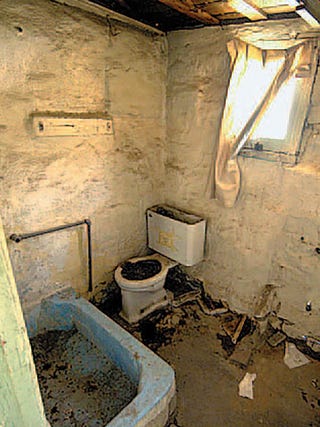
The little bedroom has two funky mattresses, but you’ll want to steer clear of the bathroom. Behind the house, 90 feet up where the mountain peaks, are three rusted lawn chairs cemented to rocks so the stoners wouldn’t fall backward while stargazing.
This content is created and maintained by a third party, and imported onto this page to help users provide their email addresses. You may be able to find more information about this and similar content at piano.io
The Link Lonk
February 26, 2021 at 04:57AM
https://ift.tt/3aQDGEK
Tested: 2006 Honda Ridgeline vs. the Compact Pickup Competition - Car and Driver
https://ift.tt/38hkzRl
Honda